
Study visit in Estonia and Finland – A TCA that became a true professional turning point
In February 2026, the Estonian National Agency organised a TCA titled Study Visit: Digital Pedagogy and AI – Best Practices from Estonia and Finland.
 ETRC
ETRC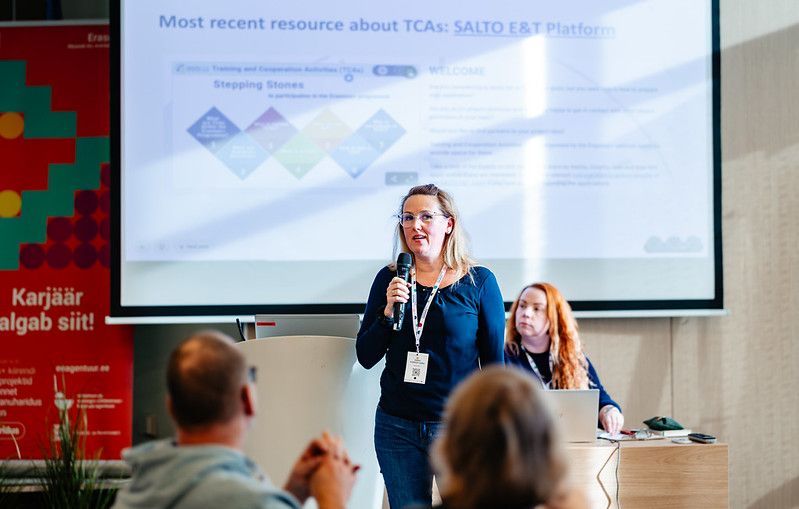 The title of the TCA was Study visit: Digital pedagogy and AI - Best practices from Estonia and Finland. From the SALTO E&T TCA Resource Centre's mentoring perspective, events like this are particularly valuable because they help us understand what additional tools and guidance LTA Coordinators, Organiser NAs, TCA Officers and PCPs may need from us in order to support participants more effectively when organising TCAs. At the same time, the content of the study visit itself was highly relevant for all types of participants — Erasmus+ beneficiaries, National Agency staff and SALTO colleagues alike. Colleagues from SALTO Digital contributed to the programme from the perspective of the digital priority, helping connect European policy discussions with the practical realities of education.
 For participants, however, the real value of the event lay in exploring how these strategic priorities translate into everyday teaching and learning practices. The focus of the programme therefore went far beyond the presentation of digital tools. At its core was a much deeper question: how is artificial intelligence reshaping our understanding of learning, knowledge, and pedagogical responsibility?
Through school visits, policy presentations and group discussions, participants explored the Estonian AI Leap initiative, the pedagogical concept behind the Student ChatGPT Edu system, and the latest research-based directions in Finnish education policy.
The TCA as a strategic learning space
 One of the Hungarian participants, Éva Tóth, has long been an active contributor to the international digital pedagogy discourse. She served as an expert at the final event of the Digitalisation LTA (2021–2024), was a speaker in its webinar series , and is a valued member of the SALTO Expert Pool. (Digitally Empowered Teachers 3. | Project-based learning approaches)
As she reflected: “The integration of AI is fundamentally a pedagogical issue, not a technological one. The real focus is on how we preserve students’ critical thinking, autonomy and ethical awareness.”
For Éva, participation was not merely inspirational, but also systemic learning: “I wanted to understand how digitally advanced countries approach the implementation of AI at institutional and policy levels.”
During the study visit, it became clear that Estonia is not simply introducing tools into schools, but is building a pedagogically regulated AI environment that supports learning processes. Finland, on the other hand, treats AI not as a separate subject but as a transversal competence linked to the development of critical thinking, ethical sensitivity and epistemic awareness.
School visits: Where space, pedagogy and technology meet
The Estonian school visits provided particularly powerful professional experiences. The example of Tallinn German Gymnasium demonstrated how an old school building can be transformed into a modern, flexible learning environment – guided by pedagogical goals rather than technological enthusiasm. Participants were especially inspired by the presence of the education technologist role, which acts as a bridge between pedagogy and technology, as well as by the functioning of professional learning communities that serve as true engines of digital innovation.
As another participant noted: “The question is no longer whether we use AI in education, but how consciously and pedagogically grounded we do it.”
At the same time, the visits revealed that even with strong national strategies in place, levels of preparedness and depth of implementation vary significantly from institution to institution. This offered a realistic picture of the challenges involved in digital transformation.
What does a TCA offer – to the participant and to the institution?
One of the most important added values of a TCA is capacity building.
“These activities are not only about inspiration – they are about capacity building. They help us embed European priorities such as digital transformation, inclusion, sustainability and responsible AI use into our institutional strategies in a more conscious and structured way.”
Participants emphasised that the study visit directly contributes to the quality of their current and future Erasmus+ projects:
“The insights gained here help ensure that AI is not used as a self-serving tool in our projects, but supports clear learning objectives – such as AI literacy, critical thinking and ethical use.”
Networking and collaborative group work laid the foundations for new partnerships, which are essential for high-quality project development.
A TCA as part of a professional learning journey
Éva Tóth’s example demonstrates that a TCA is not an isolated event, but can be part of a longer professional learning pathway.
As an expert at the final event of the Digitalisation LTA, an international speaker and webinar presenter, Éva is not only a participant but also a shaper of the digital pedagogy discourse. The presence of such professionals at TCA events creates dual value: they inspire others while continuing to broaden their own perspectives.
As she puts it: “AI does not replace the teacher – it redefines the role. The key question is how we preserve deep learning in a world where quick answers are easily available.”
Why participate in a TCA?
Based on participants’ feedback, TCAs:
• provide a European-level professional perspective,
• support strategic thinking,
• present concrete, adaptable good practices,
• initiate new partnerships,
• enhance the quality of Erasmus+ projects,
• and, not least, build professional communities.
The study visit organised within the framework of the Digital Pedagogy in the Age of AI LTA demonstrated that artificial intelligence is not merely a technological trend, but a pedagogical turning point.
And perhaps this is the most important message of the TCA:
in the age of AI, the greatest innovation remains conscious, reflective pedagogical thinking.
How can you become a TCA Participant?
Train. Cooperate. Act.
Transnational individual professional learning opportunities
TCAs – STEPPING STONES to participation in the E+ programme
1. Start with your own Erasmus+ National Agency!
The application process always begins through your National Agency, and the selection also takes place there. Visit your National Agency’s website and check the current TCA opportunities.
2. Browse the SALTO platforms!
All current TCA events can be found here:
• salto-et.net (school education, VET, higher education, adult education)
• salto-youth.net (Youth)
3. Register so you don’t miss any opportunity!
Choose the learning opportunity that best matches your professional development goals – and become part of the European professional community.
Photo credits: Karolin Viikoja, Source: Flickr